How to Tell If an Egg Is Bad: Simple Tests You Can Do at Home
If you have ever wondered how to tell if an egg is bad, you are not alone. Eggs are a staple in most households, used for everything from baking to breakfast, but sometimes you forget exactly when you bought them or how long they have been sitting in the refrigerator. Eating a spoiled egg can lead to foodborne illnesses, so it is important to know reliable ways to check whether an egg is fresh or no longer safe to eat. The good news is that there are several simple methods you can use right in your kitchen to figure out if an egg has gone bad, and they take only a few seconds to perform.
Why Egg Freshness Matters
Before diving into the specific tests, it is helpful to understand why freshness is so important. Eggs may look perfectly normal on the outside even when they are no longer good. A spoiled egg can harbor harmful bacteria such as Salmonella, which can cause food poisoning. Symptoms like nausea, vomiting, diarrhea, and fever are not something you want to risk over an inexpensive ingredient.
Egg freshness also matters for the quality of your dishes. Fresh eggs taste better, have firmer yolks, and create fluffier baked goods. When you are poaching or frying eggs, a fresh egg holds its shape beautifully, while an older egg spreads out and becomes runny. Knowing how to tell if an egg is bad will save you from both health risks and disappointing results in the kitchen.
Eggs kept in the refrigerator generally last about three to five weeks past the pack date if stored correctly. However, temperature changes, handling, and time all play a role in how long they remain safe. That is why checking them before you use them is always a smart habit.
Check the Date on the Carton
One of the first steps in figuring out how to tell if an egg is bad is to look at the dates printed on the carton. These dates can be a little confusing because you may see a sell-by date, an expiration date, or a best-by date depending on the brand and country of sale.
A sell-by date indicates how long the store can keep the eggs on the shelf. This is not the same as an expiration date. You can usually still safely eat eggs for several weeks after the sell-by date as long as they have been refrigerated properly. A best-by date is more about quality than safety, letting you know when the eggs will taste their best. Expiration dates, when provided, are stricter, but even then, eggs may still be good a little beyond that if stored properly.
While these dates provide useful guidance, they should not be the only factor in deciding whether your eggs are good or bad. Dates are estimates, but freshness depends heavily on storage and handling. That is why combining date checks with physical tests gives you the most reliable results.
The Float Test
The float test is one of the oldest and most reliable ways to determine egg freshness, and it requires nothing more than a bowl of water. To perform this test, fill a bowl with cold water and gently place your egg inside. What happens next will tell you a lot.
If the egg sinks to the bottom and lies flat on its side, it is very fresh and perfectly safe to eat. If it sinks but stands upright, it is still safe but older. These eggs are best used for baking or dishes where shape is not as important. If the egg floats to the top of the water, it is no longer good and should be thrown away.
The science behind this test is simple. Eggs have a small air cell inside that grows larger as the egg ages. When the air pocket becomes big enough, it makes the egg buoyant and causes it to float. That floating egg is a clear sign it has gone bad.
The Sniff Test
If you are unsure about an egg after doing the float test, the sniff test is the next step. Fresh eggs do not have much of a smell at all. If you crack an egg open and notice a strong, unpleasant odor, it is a clear indication that the egg is spoiled. Bad eggs often release a sulfur-like smell, similar to rotten food, and once you smell it, you will not mistake it again.
The sniff test works whether the egg is still in its shell or already cracked. If the shell is intact but you detect an unusual odor coming through it, do not use that egg. If you only notice the smell once you crack it open, trust your senses and discard it immediately. Even if you are second-guessing yourself, remember that an egg should not smell offensive.
Inspect the Shell
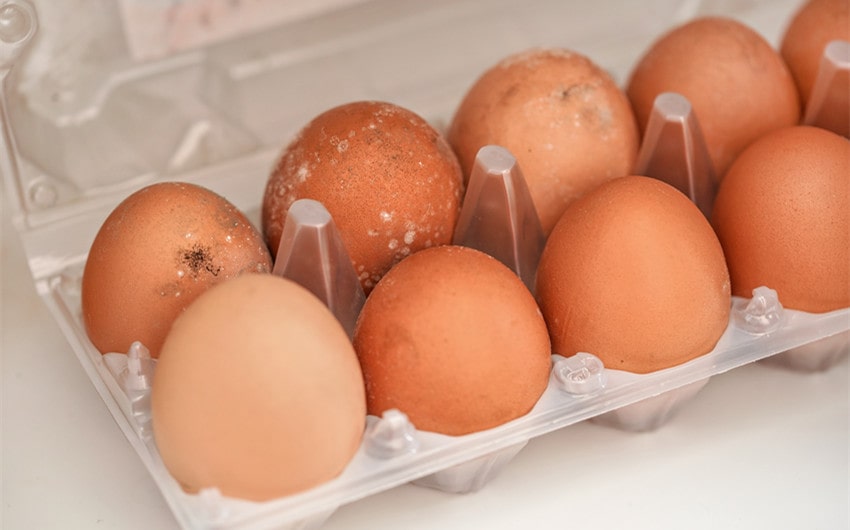
Sometimes you can tell if an egg is bad without even cracking it open. Examining the shell closely can reveal important clues. A fresh egg has a clean, unbroken shell that looks smooth and dry. If you notice cracks, sliminess, or a powdery residue, the egg may be contaminated with bacteria or mold.
A slimy shell often indicates the presence of bacteria, while a chalky or powdery coating may be mold. Both are clear warning signs that the egg is unsafe to eat. In addition, if an egg has been cracked open accidentally and left exposed, bacteria can quickly find their way inside, making it unsafe. Always choose eggs with intact, clean shells, and avoid any that look suspicious.
Crack It Open
If the egg passes the earlier tests but you are still unsure, the most direct method is to crack it open and inspect the inside. A fresh egg will have a bright yolk that stands tall and firm, surrounded by thick egg whites that do not spread too much.
If the whites are very watery and runny, or the yolk appears flat and breaks easily, the egg is older. While this does not always mean it is unsafe, the quality is definitely lower. If you see any unusual colors—such as pink, green, or iridescent tints—discard the egg immediately. These colors can indicate bacterial growth.
It is worth noting that seeing a red or brown spot inside an egg is usually harmless. These are blood or meat spots that occasionally occur during egg formation and do not make the egg unsafe. You can remove the spot with the tip of a knife if you prefer, but the rest of the egg is fine to use.
How to Store Eggs to Keep Them Fresh Longer
Knowing how to tell if an egg is bad is important, but it is equally useful to understand how to store eggs properly so they last as long as possible. Proper storage can add weeks to the shelf life and keep your meals safer.
Always refrigerate eggs at a consistent temperature. In the United States, eggs are washed before packaging, which removes the protective coating that naturally keeps out bacteria. This makes refrigeration essential. Ideally, store eggs in their original carton rather than in the door of the fridge. The carton helps protect them from absorbing strong odors from other foods, and the main shelves are cooler and more stable in temperature than the door, which warms up each time you open it.
Avoid washing eggs before storing them. Washing removes the natural bloom that protects the shell, making bacteria easier to enter. Instead, wash them right before you plan to use them if needed.
Most eggs can last three to five weeks in the refrigerator beyond the pack date, but it is always best to check them using the methods described earlier. If you cook boiled eggs, remember they should be eaten within a week.
If you have too many eggs to use before they expire, consider freezing them. Crack them open, beat lightly, and freeze in an airtight container. You can also separate yolks and whites for specific uses later. Freezing gives you months of extra time to enjoy eggs safely.